
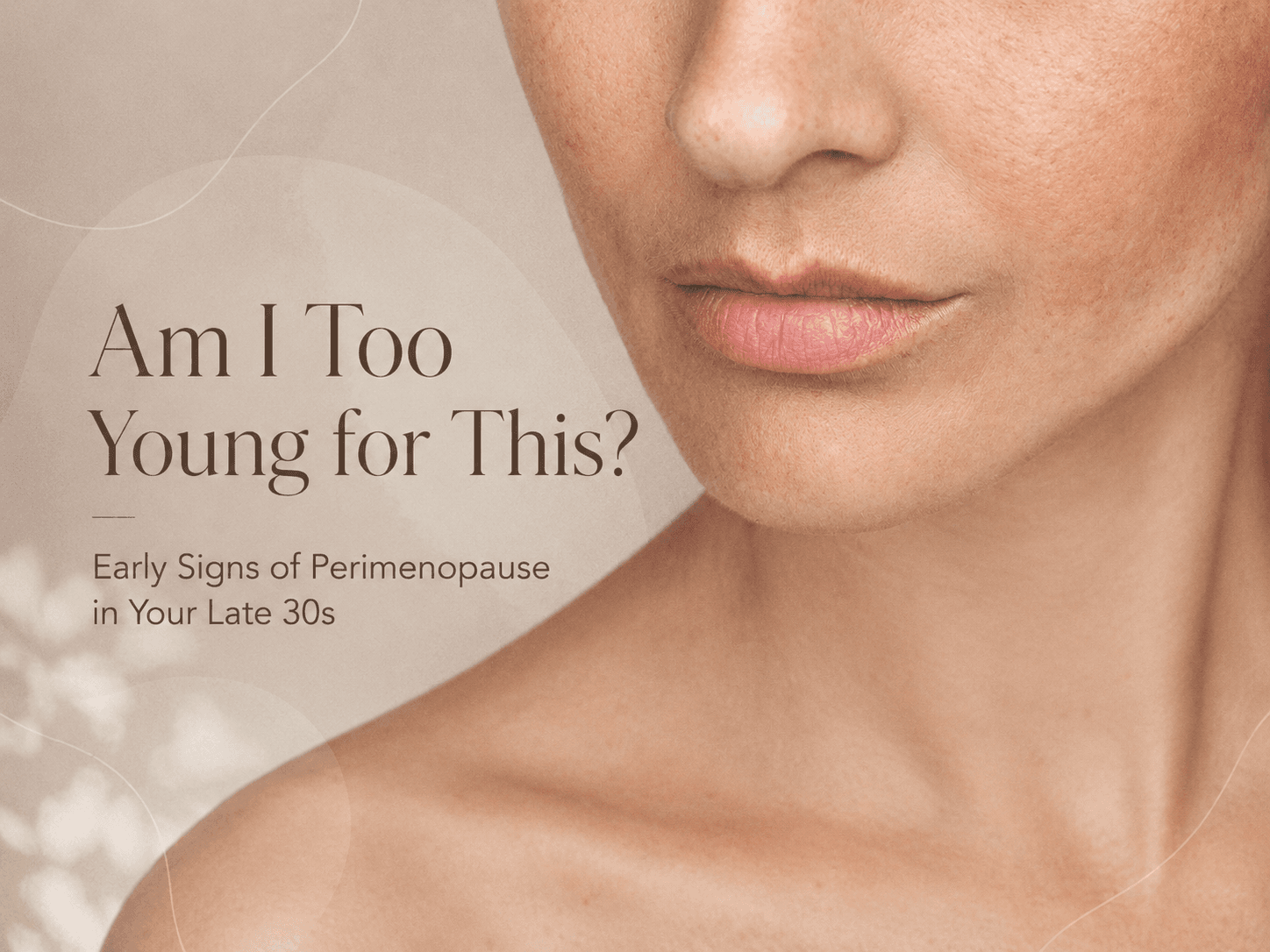
Am I Too Young for This? Early Signs of Perimenopause in Your Late 30s
Think perimenopause is only a problem for your 40s? Learn why it often begins in your mid-to-late 30s, the early skin signs to watch for, like sudden dryness and hormonal acne, and how to adjust your skincare routine for these new hormonal shifts.
In This Article
- Why perimenopause can begin in your mid to late thirties.
- The early skin signs that often show up before anything else.
- Why this stage gets dismissed so often, and why that's worth changing.
- What a consultation actually looks like at this stage.
“Am I too young for this?” is a question we hear more than you'd think, usually from women in their late thirties who are noticing something shifting in their skin, their sleep, or their cycle, and feeling a little unsettled because everything they've read says perimenopause is a your-forties problem.
Here's the honest answer. You're not too young, and you're not imagining it. Perimenopause can begin as early as your mid-thirties, and for a lot of women it does. It just doesn't get talked about at that age nearly as much as it should.
Why Nobody Warned You This Could Start So Early
Most of what we grow up hearing about menopause centers on women in their fifties, hot flashes, and the end of periods altogether. Perimenopause, the transition leading up to that point, is a completely different story. It can start eight to ten years before menopause itself, which for some women means the late thirties is exactly when the first changes appear.
Estrogen doesn't decline in a neat, predictable line during this stage. It swings, rising and falling unevenly for years before it eventually settles lower for good. That rollercoaster pattern is why symptoms can feel confusing or inconsistent, showing up one month and disappearing the next.
What This Actually Looks Like in Your Skin
Skin is often one of the very first places these hormonal shifts show up, sometimes well before period changes become obvious. A few patterns we hear about again and again from clients in this age range:
- Dryness that seems to come out of nowhere, even if you've never had dry skin in your life.
- Breakouts along the jawline and chin that feel more like your teenage years than your thirties.
- Skin that suddenly seems more reactive to products you've used for years without any issue.
- Fine lines appearing a little faster than you expected, alongside a general sense that your skin looks tired even when you're not.
None of this means your skin is failing you or that you're aging faster than you should be. It means your estrogen levels are fluctuating, and estrogen has a hand in nearly everything your skin does, from oil production to collagen to how well it holds onto moisture.
Why It Matters to Name This Early
One of the more frustrating parts of perimenopause starting in your thirties is that it can be easy to dismiss, both by others and by yourself. You might chalk skin changes up to stress, a new product, or just having a bad month. Sometimes that's exactly what it is. But when the pattern keeps repeating, it's worth considering that something hormonal might be underneath it.
Naming it early gives you options you wouldn't have if you waited. It means adjusting your skincare and treatment plan to match what your skin needs now, rather than continuing to use a routine built for your twenty-five-year-old skin and wondering why it stopped working.
What We Look At in a Consultation
- Your cycle history and any changes in timing, flow, or predictability.
- How your skin has changed over the last one to two years, not just the last few weeks.
- Sleep, stress, and other factors that can overlap with or amplify hormonal skin changes.
- What's realistic for your skin right now, whether that's a skincare adjustment, a treatment like biostimulators or skin boosters, or simply a plan to watch and revisit in a few months.
Is This Right for Me?
If you're in your late thirties and something about your skin, your cycle, or how you're feeling day to day just seems different lately, that instinct is worth listening to. You don't need a dramatic symptom list to start this conversation. A simple consultation with our Registered Nurses (RN/RPN), under the medical direction of Vijeta Singh, NP-PHC, MScN, is a good place to start sorting out what's going on and what, if anything, you want to do about it.
Ready to talk to our clinical team?
Every skin story is a little different. Let's talk through what's happening with yours.
3455 Harvester Rd, Unit 10, Burlington, Ontario L7N 3P2
Continue reading
My Baby Turned Two and My Skin Still Isn't Mine
What happens when postpartum skin changes outlast the one-year timeline everyone quotes? Discover the science behind long-term hormonal shifts, lingering pigmentation, and how to gently manage your skin during the toddler years.
Read article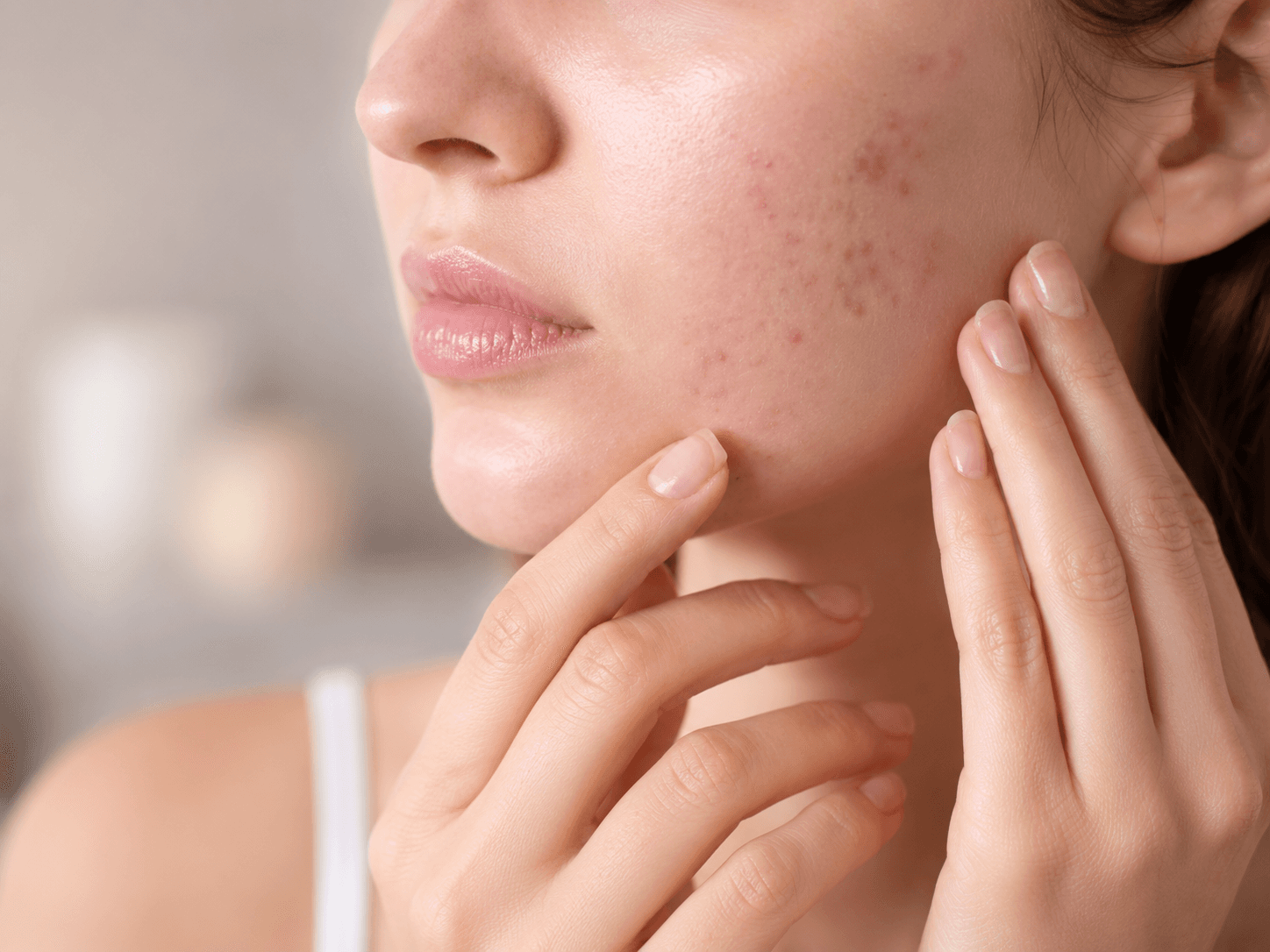
Why Your Skin Breaks Out Like Clockwork Every Month
Dealing with clockwork breakouts on your chin and jawline? Learn the difference between cycle-related hormonal acne in your 30s and other hormonal shifts, plus the best home and in-clinic strategies to finally take control of your skin.
Read article
Men's Skin & Wellness: Golf, Yard Work, and Sun Damage
What 20 summers outside does to your face, and what you can actually do about it.
Read article