
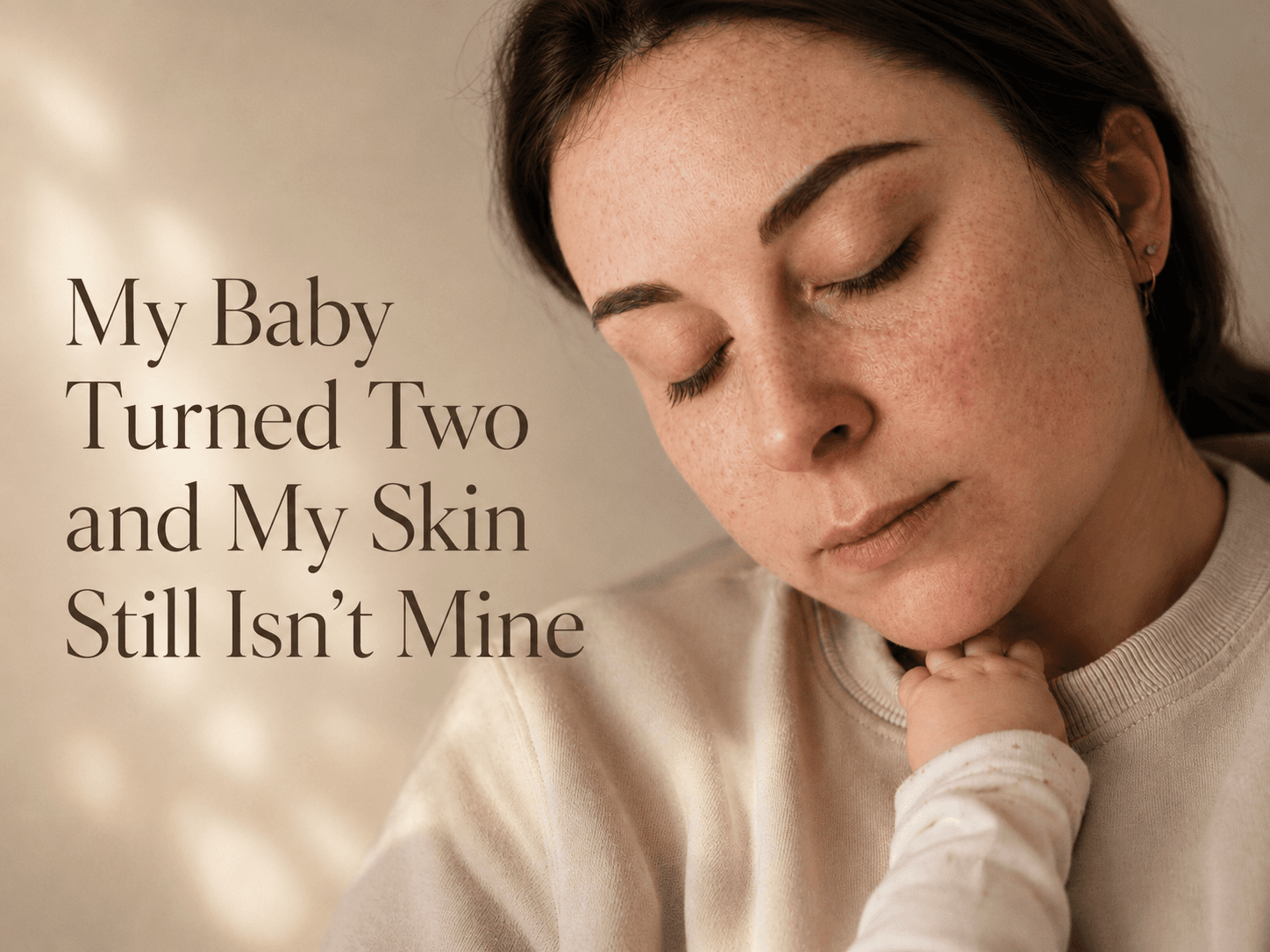
My Baby Turned Two and My Skin Still Isn't Mine
What happens when postpartum skin changes outlast the one-year timeline everyone quotes? Discover the science behind long-term hormonal shifts, lingering pigmentation, and how to gently manage your skin during the toddler years.
In This Article
- Why the standard one-year postpartum timeline doesn't fit everyone.
- What's often still happening hormonally years after delivery.
- Why this stage of motherhood gets so little skincare attention.
- How we build a plan around breastfeeding, timing, and real life.
Your baby isn't a baby anymore. They're running around, saying full sentences, maybe starting daycare or preschool, and somewhere in the middle of all that you catch your reflection and think, when is my skin going to feel like mine again?
Almost everything written about postpartum skin focuses on the first six weeks or the first year. Nobody really tells you what to expect if you're two or three years out and still waiting to feel like yourself. So, let's talk about that stage, because a lot of the moms we see in Burlington, Oakville, Hamilton, Milton, and across the Halton Region are living in exactly this in-between space.
The One Year Timeline Everyone Quotes Isn't Wrong, Just Incomplete
Most postpartum changes do settle within three to six months, and a lot of sources will tell you a year is the outer edge of that recovery window. For plenty of women, that's true. Hormones stabilize, hair sheds and regrows, skin evens back out.
But for others, especially with a second or third baby, ongoing breastfeeding, sleep that's still nowhere near consistent, or a body that's simply still in the middle of a huge, ongoing life change, that one year mark comes and goes without things feeling resolved. That doesn't mean something is wrong with you. It usually means your particular hormonal and life circumstances are asking for more time, or a bit of outside support, than the average timeline accounts for.
What's Actually Still Happening Under the Surface
Pregnancy and the postpartum period put your estrogen and progesterone through a dramatic drop right after delivery, and depending on breastfeeding status, cycle return, and your own biology, those hormones can stay lower or less steady for a lot longer than the standard narrative suggests.
- Melasma or patches of hyperpigmentation from pregnancy that haven't faded, sometimes because ongoing sun exposure is quietly keeping them active.
- Skin that's drier or more reactive than it used to be, a barrier change that can persist well past the newborn stage.
- Loss of the pregnancy glow along with a texture or tone that just feels flatter than before.
- Fine lines or volume changes that showed up gradually and never got addressed because there was, understandably, no time.
Why This Stage Gets Skipped Over
It makes sense that skin isn't top of mind during the newborn and toddler years. You're keeping a small human alive, and that takes everything you have. But once things settle into a rhythm, a lot of women find themselves with a bit more room to think about their own skin again, only to realize nobody talks about what to actually do at this stage. Most postpartum content assumes you're either six weeks in or fully recovered by month twelve.
What We Actually Look At Together
- Whether pigmentation is old and stable or still being triggered by sun exposure.
- How your skin barrier is doing now, not what it looked like before kids.
- Whether you're still breastfeeding or trying to conceive again, since that shapes what treatments make sense.
- A realistic plan that fits your actual life right now, not a rushed fix.
Is This Right for Me?
If your kids are past the newborn stage and you're still waiting to feel settled in your own skin, that waiting doesn't have to continue indefinitely. A consultation with our Registered Nurses (RN/RPN), under the medical direction of Vijeta Singh, NP-PHC, MScN, can help you understand what's actually going on with your skin at this point and what a sensible next step looks like, whether that's a skincare adjustment, a treatment like skin boosters or AlumierMD peels, or simply a conversation about timing if you're still breastfeeding.
You don't need to have it all figured out before you come in. Bring your questions, your timeline, and whatever's been bothering you, and we'll go from there.
Ready to talk to our clinical team?
Every skin story is a little different. Let's talk through what's happening with yours.
3455 Harvester Rd, Unit 10, Burlington, Ontario L7N 3P2
Continue reading
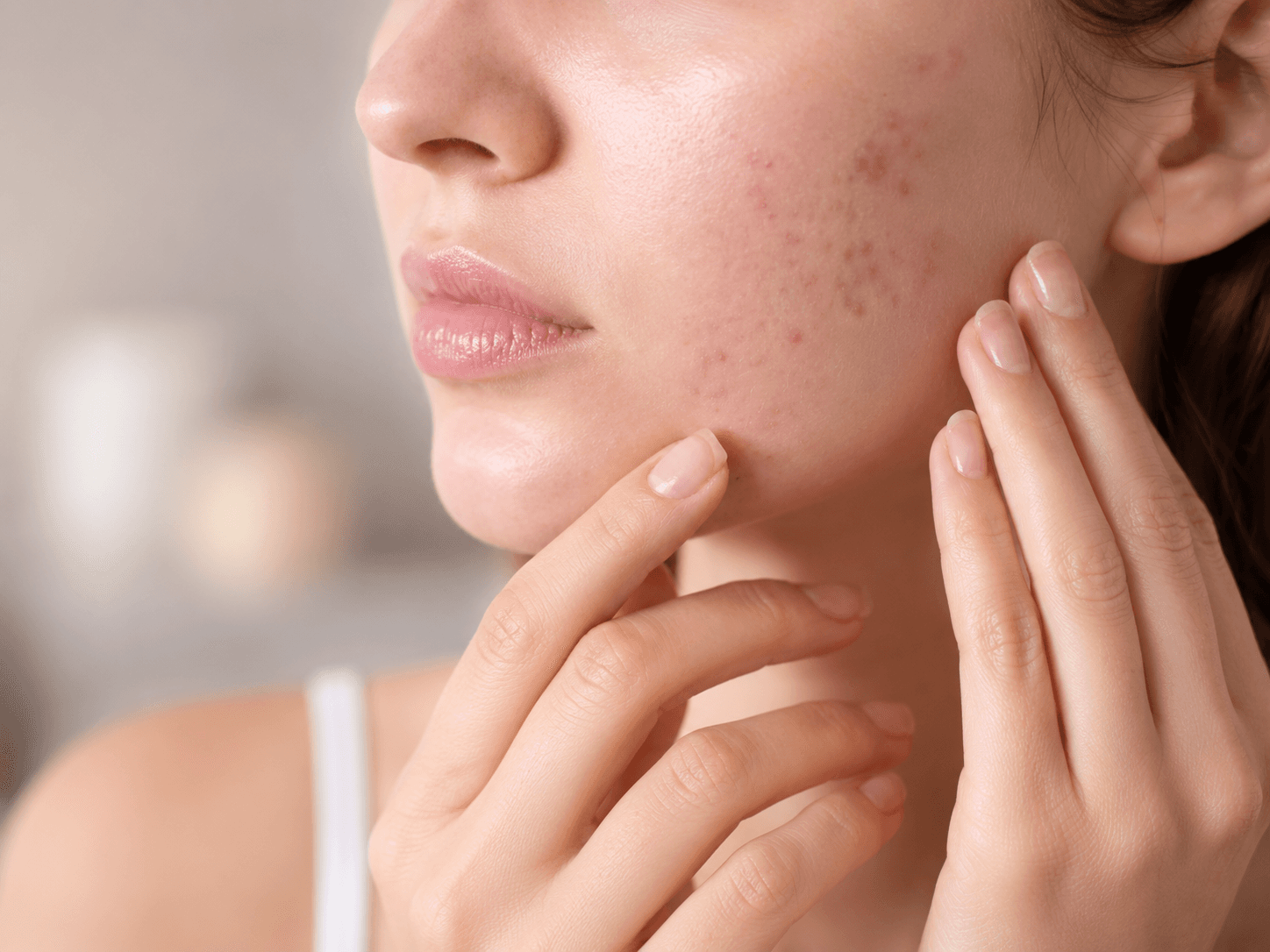
Why Your Skin Breaks Out Like Clockwork Every Month
Dealing with clockwork breakouts on your chin and jawline? Learn the difference between cycle-related hormonal acne in your 30s and other hormonal shifts, plus the best home and in-clinic strategies to finally take control of your skin.
Read article
Men's Skin & Wellness: Golf, Yard Work, and Sun Damage
What 20 summers outside does to your face, and what you can actually do about it.
Read article
Perimenopause, Menopause & Your Skin
What's really happening beneath the surface, and how to feel like yourself again
Read article