
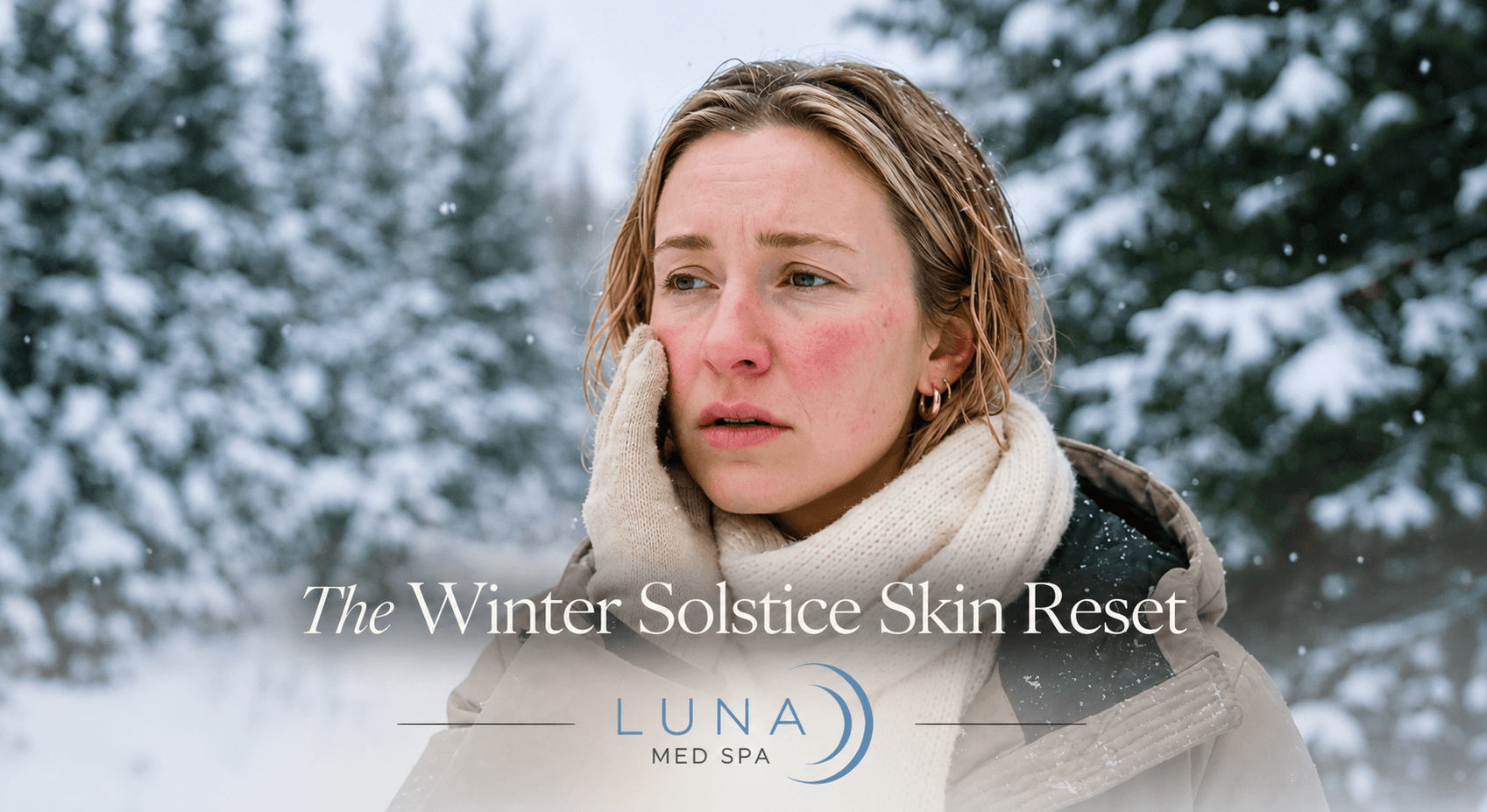
The Winter Solstice Skin Reset
Why Ontario winters are so hard on your skin barrier, the signs it needs repair, and a gentle step-by-step reset you can start on the winter solstice.
In This Article
- Why Ontario winters are so hard on your skin barrier.
- The signs your barrier needs repair, and when to see a doctor.
- A gentle step-by-step reset you can start on the solstice.
- How the long winter nights can actually help your skin recover.
On December 21st, Ontario gets its longest night of the year. In Burlington, the sun comes up late, slips away before dinner, and most of us spend the hours in between going from a heated car to a heated office to a heated living room. It's cozy, and it's also quietly one of the hardest stretches of the year on your skin.
Every winter, clients across Burlington, Oakville, Hamilton, Milton, and the Halton Region come into Luna Med Spa saying some version of the same thing. My skin feels tight and dry, my usual products sting, and I look a bit sandpapered no matter how much moisturizer I put on. If that sounds familiar, there's a good chance your skin barrier is asking for help.
Why Ontario Winters Are So Tough on Your Barrier
Your skin barrier is the outermost layer of your skin, and its job is to hold water in and keep irritants out. Think of it as a brick wall, with skin cells as the bricks and natural oils and ceramides as the mortar. When the mortar is intact, skin feels soft, calm, and comfortable. When it wears down, water escapes faster and everything starts to feel reactive.
Winter attacks that mortar from both directions. Cold outdoor air holds very little moisture, and then we walk indoors into forced-air heating that dries things out even more. Wind, quick swings between freezing and warm, and long hot showers on cold mornings add to it. Even if you're doing everything you did in July, your skin is working under completely different conditions.
What a Struggling Barrier Feels Like
Barrier trouble doesn't always look dramatic. More often it shows up as a handful of small, annoying changes that build over a few weeks:
- Tightness after cleansing, even with a gentle cleanser.
- Products you've used for years suddenly stinging or burning.
- Flaking, rough patches, or makeup that won't sit smoothly.
- Redness or sensitivity around the nose, cheeks, and mouth.
- Dullness, and sometimes breakouts, because irritated skin can also get congested.
If you've got persistent itching, a rash that keeps coming back, or skin that's cracking or bleeding, please check in with your doctor. Eczema and other skin conditions can flare in winter and deserve proper medical attention.
The Solstice Reset: A Gentle Plan
We like the solstice as a natural moment to hit pause, because it gives a simple reason to slow down and simplify. Here's the approach we walk clients through.
Strip Your Routine Back
When skin is compromised, more is rarely better. For a few weeks, focus on a gentle cleanser, a good moisturizer, and sunscreen. If you're using strong exfoliating acids like Glycolic, Salicylic or Lactic acids or a higher-strength retinoid, talk to us about easing off or spacing them out while your barrier recovers. Pushing through irritation tends to prolong it.
Rebuild With the Right Ingredients
Look for moisturizers that combine three kinds of ingredients: humectants that draw water in, like hyaluronic acid and glycerin, ceramides and fatty acids that rebuild the mortar, and a lighter occlusive layer to seal everything in. Applying moisturizer while your skin is still slightly damp from cleansing helps lock in more hydration.
Keep Wearing Sunscreen
It feels silly on a grey January afternoon, but UV is still there, and snow can bounce it back at you. Daily sunscreen protects skin that's already working hard to repair itself.
Change a Few Habits
- Take warm showers instead of hot ones, and keep them shorter.
- Run a humidifier in your bedroom if the air in your home feels bone dry.
- Pat your face dry rather than rubbing, and moisturize within a minute or two.
- Drink water, eat enough healthy fats, and protect your sleep as much as life allows.
Why the Long Nights Can Work in Your Favour
Skin does a lot of its repair work while you sleep. Overnight it loses more water through the surface and ramps up its renewal processes, which is why a nourishing evening routine matters so much in winter. Longer nights give you a natural excuse to slow down, wash your face without rushing, apply something rich, and actually get to bed on time. It's a small ritual, but consistent evenings do more for a stressed barrier than any single product.
How We Can Help at the Clinic
If you've been doing the basics and your skin still isn't settling, an assessment is a good next step. Our team of Registered Nurses (RN/RPN), can look at what your skin is really doing and build a plan around it. Sometimes that means a gentler home routine and better product choices. Other times it means adding hydrating treatments or skin boosters to bring moisture back from within.
We also think about timing. Treatments like microneedling work best on a calm, healthy barrier, so if your skin is currently irritated, we may recommend resetting first and booking the more active treatments once things have settled. Winter can be a great season for collagen-focused work, as long as your skin is ready for it.
Is This Right for Me?
If your skin has felt tight, reactive, or just plain tired since the weather turned, this reset is for you. You don't need a perfect routine or a long list of symptoms to come in. Book a free consultation and we'll talk through what your skin needs to get through the darkest part of the year and come out of it glowing.
Ready to talk to our clinical team?
Every skin story is a little different. Let's talk through what's happening with yours.
3455 Harvester Rd, Unit 10, Burlington, Ontario L7N 3P2
Continue reading

Why Your Skin Broke Out After You Stopped the Pill
Stopped the pill and your chin is staging a protest? Discover why post-pill acne happens, how long the hormonal rebound actually lasts, and how to gently support your skin while it recalibrates.
Read article
Am I Too Young for This? Early Signs of Perimenopause in Your Late 30s
Think perimenopause is only a problem for your 40s? Learn why it often begins in your mid-to-late 30s, the early skin signs to watch for, like sudden dryness and hormonal acne, and how to adjust your skincare routine for these new hormonal shifts.
Read article
My Baby Turned Two and My Skin Still Isn't Mine
What happens when postpartum skin changes outlast the one-year timeline everyone quotes? Discover the science behind long-term hormonal shifts, lingering pigmentation, and how to gently manage your skin during the toddler years.
Read article