
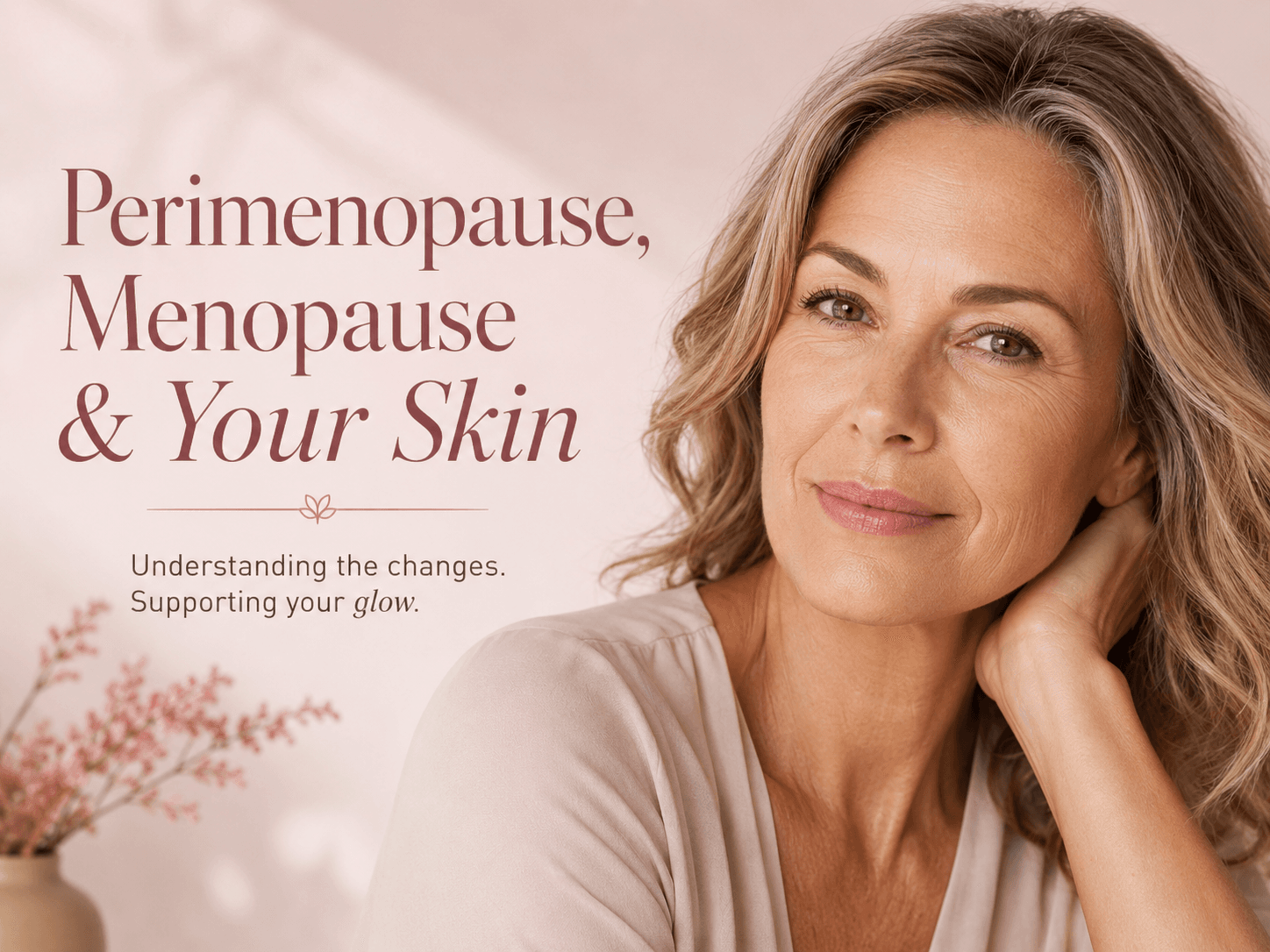
Perimenopause, Menopause & Your Skin
What's really happening beneath the surface, and how to feel like yourself again
Quick Take
- Declining estrogen during perimenopause and menopause reduces collagen production by up to 30% in the first five years after your final period.
- Skin changes (thinning, dryness, sagging) and systemic changes (hot flashes, sleep disruption, bone density loss) often develop together, driven by the same hormonal shift.
- Hair thinning and changes in facial volume are common and treatable; this is not something you have to simply live with.
- Biostimulators, skin boosters, and PRF/PRP can support collagen and hydration from within, while medical-grade skincare supports your barrier day to day.
- Every plan starts with a consultation with our Registered Nurses (RN/RPN), under the medical direction of Vijeta Singh, NP-PHC, MScN.
Understanding Perimenopause and Menopause
Perimenopause is the transitional stage leading up to menopause, typically beginning in a woman's mid-to-late 40s, though it can start earlier. During this time, estrogen and progesterone levels fluctuate and gradually decline, often for several years before menstruation stops altogether. Menopause itself is marked retroactively, defined as 12 consecutive months without a period, and is followed by the postmenopausal years, when estrogen remains consistently low.
Estrogen does far more than regulate the menstrual cycle. Estrogen receptors are found throughout the skin, hair follicles, bone, vascular system, and brain, which is why its decline during this transition affects so much more than reproductive health. Understanding this connection is the first step toward addressing the changes many women notice in their skin, hair, and overall sense of wellbeing during perimenopause and menopause.
What's Happening Hormonally
Estrogen supports collagen synthesis, skin hydration, and blood flow to the skin and scalp. As levels decline, the body produces less collagen and elastin, skin becomes drier and thinner, and circulation to the skin and hair follicles is reduced. These changes tend to accelerate in the first five years following the final menstrual period, which is why many women notice a more visible shift in this window rather than a slow, even change over decades.
How Hormonal Shifts Show Up in Your Skin
Collagen and Elasticity Loss
Collagen gives skin its structure, and elastin allows it to spring back into place. Both decline with falling estrogen, contributing to fine lines, sagging along the jawline and cheeks, and a general loss of facial volume. Many women describe this as their face looking 'tired' even when they feel well-rested, which reflects a structural change in the skin rather than a lifestyle issue.
Dryness, Sensitivity, and Barrier Changes
Reduced estrogen lowers the skin's natural oil production and its ability to hold onto moisture, weakening the skin barrier. This can show up as persistent dryness, flakiness, increased sensitivity to products that were previously well tolerated, and a duller overall complexion. Some women also notice new or worsening rosacea-like flushing during this stage, related to vasomotor changes.
Hair Thinning and Texture Changes
Hair follicles are also estrogen-sensitive. Many women notice diffuse thinning across the scalp, a widening part line, or hair that feels finer in texture during perimenopause and menopause. This is a hormonally driven process, distinct from other causes of hair loss, and it responds well to treatments that support scalp circulation and follicle health.
Beyond the Skin: Systemic Changes During This Transition
Skin and hair changes rarely occur in isolation. The same hormonal shifts driving them are connected to systemic changes throughout the body, and recognizing these connections helps explain why this stage can feel like so much is happening at once.
This is also a good stage to loop in your family physician or a menopause-informed nurse practitioner for bloodwork, bone density screening, and a conversation about whether hormone therapy is appropriate for you. Our Registered Nurses (RN/RPN) and Medical Director focus specifically on the skin, hair, and aesthetic side of this transition, and we're glad to work alongside your primary care provider as part of your broader care.
Treatments That Can Help, At Luna Med Spa
While we can't change hormone levels themselves, a number of RN-led treatments can meaningfully support collagen production, hydration, and hair and skin quality during and after the menopause transition. Every plan is personalized following a consultation and is overseen under the medical direction.
Biostimulators for Collagen Support
Biostimulators work by encouraging your body to rebuild its own collagen over time, rather than simply adding volume. This makes them particularly well suited to the gradual collagen loss seen in perimenopause and menopause, helping to restore facial structure and skin quality over a series of sessions.
Skin Boosters for Hydration and Barrier Support
Skin boosters deliver hydration directly into the skin to help address the dryness and barrier changes common during this stage. Many clients notice improved skin texture, tone, and a healthier-looking glow, particularly when combined with a consistent medical-grade skincare routine.
PRF and PRP for Skin Quality and Hair Thinning
Platelet-rich fibrin (PRF) and platelet-rich plasma (PRP) use your own blood's growth factors to support tissue repair. For skin, this can improve texture, tone, and the appearance of fine lines. For hair, PRF and PRP are often used to support scalp circulation and follicle health in cases of hormonally driven thinning.
Anti-Wrinkle Injections for Expression Lines
Anti-wrinkle injections (neuromodulator treatment) continue to be useful during this stage for softening expression lines, particularly around the forehead and eyes, and can be used alongside collagen-supporting treatments as part of a broader plan.
Medical-Grade Skincare
A well-suited home skincare routine plays a significant role in supporting the skin barrier during hormonal transitions. Our team can help you build a routine using AlumierMD, including appropriate Canadian SPF options, to support hydration and barrier repair between in-clinic treatments.
Vitamin Therapy for Systemic Support
Because perimenopause and menopause affect energy, sleep, and overall wellbeing alongside the skin, some clients choose to pair aesthetic treatments with vitamin therapy. Options include B12 Methylcobalamin, NAD+, Glutathione, MICC, and Vitamin D3, and these can be discussed as part of a broader consultation.
Is This Right for Me?
This stage looks different for everyone, and the right approach depends on your skin, your hair, your health history, and your goals.
You may be a good candidate if you:
- Are in perimenopause, menopause, or postmenopause and have noticed changes in skin texture, volume, or hydration.
- Have noticed thinning hair or a widening part line since your cycle began changing.
- Want a gradual, natural-looking approach to supporting collagen and skin quality.
- Are looking to build or refresh a skincare routine suited to a changing skin barrier.
- Are curious about combining in-clinic treatments with systemic wellness support.
A consultation is especially important if you:
- Are currently on or considering hormone replacement therapy.
- Have a history of keloid scarring, active skin infections, or bleeding disorders.
- Are pregnant or breastfeeding.
- Have a significant change in hair loss pattern that hasn't been medically evaluated.
“So many clients tell us they thought these changes were just something to accept quietly. They're not. This is a hormonal transition with real, treatable effects on the skin and hair, and there is a lot we can do together.”
Our Registered Nurses (RN/RPN), under the medical direction of Vijeta Singh, NP-PHC, MScN, will walk through your history and goals with you and build a plan that fits your skin, your hair, and your stage of this transition.
Ready to Talk Through Your Skin & Hair Changes?
Our Registered Nurses (RN/RPN) will listen to your concerns and build a plan suited to your skin, hair, and this stage of life.
3455 Harvester Rd, Unit 10, Burlington, Ontario L7N 3P2
Continue reading
Pregnancy & Postpartum: Your Skin After Baby
What's changing hormonally through pregnancy, breastfeeding, and beyond, and what's safe, stage by stage.
Read article
Men's Skin & Wellness: Man Maintenance
A Medical Aesthetics Guide to Looking Less Tired, More You: Thinning hair, tired eyes, a softer jawline, here's your no-nonsense guide to fixing it.
Read article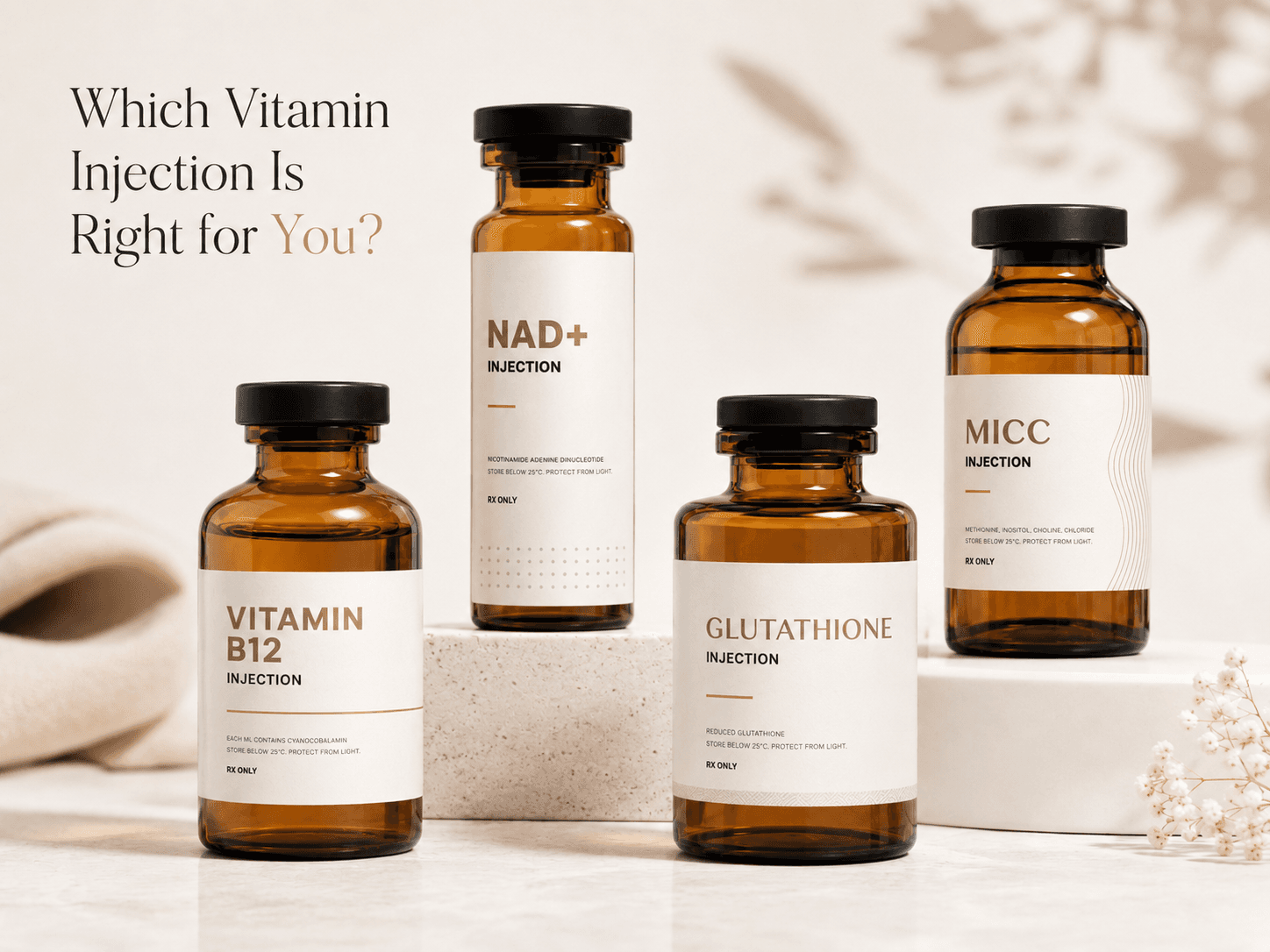
B12, NAD+, Glutathione, and MICC: Which Vitamin Injection Is Right for You?
A clear, honest guide to vitamin and wellness injections at Luna Med Spa Burlington, what each one does, who benefits most, and how to choose.
Read article